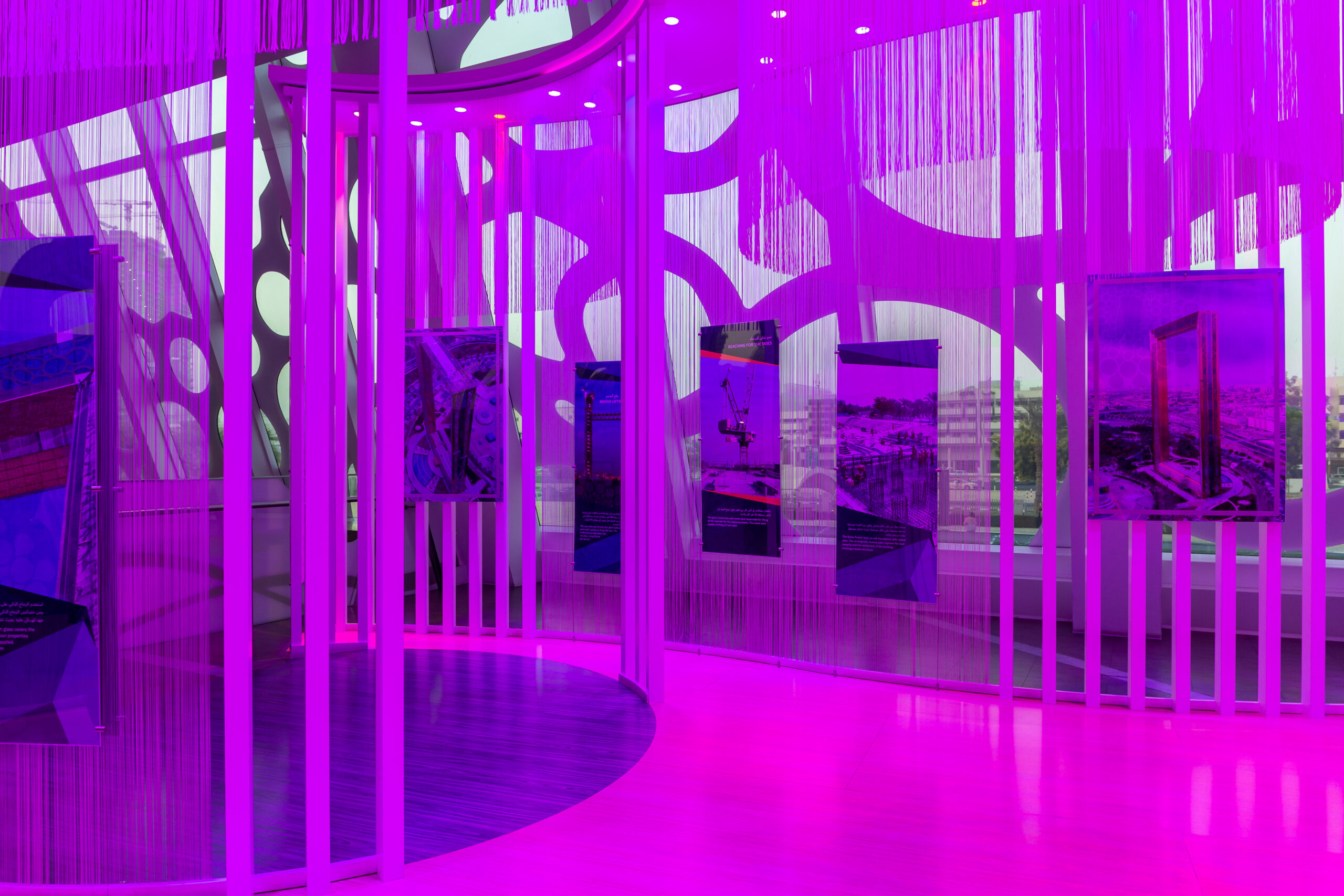
Cultural institutions usually work very well on many layers of discourse: the visual, the historical context, the narrative aligned with the conceptual, the architecture of the space… and yet music still often remains in a secondary place. As if its function were limited to accompanying an opening, setting the mood for an event or appearing occasionally in an audiovisual piece.
When an institution thinks well about music, it gains in impact, in discourse, in coherence. A deeper way of relating to its publics and of mediating. It gains memory. And above all, it gains something very valuable: a non-visual dimension with which to activate the experience.
At FLOOOD, we understand music as a fundamental layer of experience and a tool capable of generating emotional impact, atmosphere, and language. Applied to the cultural world, that means that music can function as a sensitive technology of reading: a way of generating context, evoking narrative and reinforcing identity, building a deeper experience for the visitor and/or the community.
It is not about putting music to the opening of an exhibition or of a cultural programme. It is about asking oneself what role sound can play inside the institution that wants to be more porous, more alive and more connected with its publics.
Music can act as a mediator when it helps bridge the gap between a complex proposal and its reception. It can act as an identity when an institution defines a musical criterion coherent with its vision, its context, and its relationship with contemporary culture and the public. And it can act as an experience by modulating the way the space is inhabited, remembered, and traversed.
That is valid for a museum, a foundation, an art centre, an art fair, an artist residency, a public programme, an opening or a whole cycle. Because not all institutions need to sound the same, and that is precisely where the interesting work begins. Some will need a more contemplative approach, others a more experimental one, warmer and closer, or more rooted in a territory. Others are more commercial, contemporary and transversal. Or others more connected to the community or memory.
The important thing is that the decision is not arbitrary. That there is a real relationship between identity, context and experience. FLOOOD sets out in its cultural collaboration policy to be present in projects where music plays a central role and where there is real coherence among identity, context, experience, and community.
That is exactly what many institutions are still not fully exploiting: that music can be part of the curatorial thought process. It can facilitate a mode of reading and be a tool for community integration. It can be a way of summoning the publics, of situating a sensitivity, of activating a different listening of the space and of expanding the institutional narrative beyond the visible.
Basically, it can help an institution leave a mark not only in memory but also in one’s own body and the communal body.

Comments are closed